
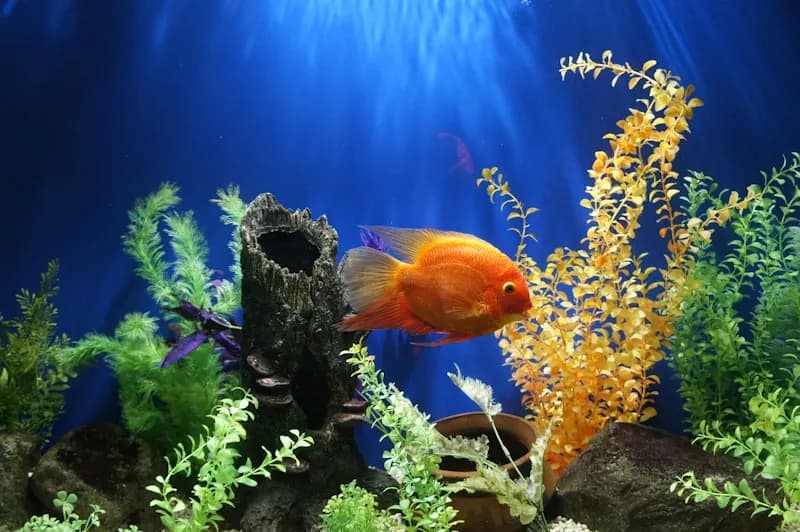
Made famous by the animated film Finding Nemo, clownfish (Amphiprioninae) are among the most recognizable fish in the world. Their bold orange-and-white stripes, waddle-like swimming style, and symbiotic relationship with sea anemones make them endlessly fascinating. However, unlike most of the fish covered on this site, clownfish are marine (saltwater) fish. Keeping them requires a fundamentally different setup than freshwater aquariums. If you are ready for the rewarding challenge of marine fishkeeping, this guide will get you started on the right path.
Why Can Clownfish Only Live in Saltwater?
Clownfish cannot live in freshwater. They are exclusively marine fish that require saltwater with specific salinity, pH, and mineral levels. A marine aquarium is more complex and expensive to set up and maintain than a freshwater tank. If you are new to fishkeeping, we recommend starting with a freshwater setup to learn the basics before transitioning to saltwater. That said, clownfish are among the hardiest and most beginner-friendly marine fish, making them an excellent first saltwater species.
What Clownfish Species Are Available?
There are about 30 species of clownfish, but a few dominate the aquarium trade:
Ocellaris Clownfish (Amphiprion ocellaris)
The "Nemo" fish. The most popular and widely available clownfish. Bright orange with three white bands outlined in black. Hardy, peaceful, and readily available as captive-bred specimens. Grows to 7-8 cm. This is the best species for beginners.
Percula Clownfish (Amphiprion percula)
Very similar to ocellaris but with thicker black outlines around the white bands. Slightly more delicate but equally popular. Often confused with ocellaris in stores.
Maroon Clownfish (Premnas biaculeatus)
The largest clownfish species, reaching 15-17 cm. Dark maroon to burgundy body with gold or white bands. Significantly more aggressive than other clownfish species and needs more space. Not recommended for beginners.
Clarkii Clownfish (Amphiprion clarkii)
Yellow to orange body with two white bands. The most adaptable clownfish, accepting the widest range of anemone hosts. Hardy and active but can be semi-aggressive.
What Tank Setup Do Clownfish Need?
Tank Size
A pair of ocellaris or percula clownfish can thrive in a tank as small as 75 litres (20 gallons). However, 100-150 litres (25-40 gallons) is more practical as it provides better water stability and room for an anemone if desired. Maroon clownfish need at least 200 litres due to their size and aggression.
Essential Equipment
- Protein skimmer: Removes organic waste before it breaks down. Essential for marine tanks.
- Powerhead or wavemaker: Creates water circulation that mimics ocean currents.
- Heater: Maintains stable temperature. Marine tanks need precise temperature control.
- Live rock: Porous rock that houses beneficial bacteria for biological filtration. Use 0.5-1 kg per litre of tank volume.
- Reef-quality salt mix: For preparing saltwater. Never use table salt or freshwater aquarium salt.
- Refractometer or hydrometer: For measuring salinity/specific gravity.
- RO/DI water: Reverse osmosis/deionized water is ideal for mixing saltwater and top-offs.
Water Parameters
Marine water parameters are less forgiving than freshwater. Stability is even more important than hitting exact numbers. Understanding water parameters is critical in saltwater keeping:
- Temperature: 24-27°C (75-80°F)
- Salinity: 1.023-1.025 specific gravity (35 ppt)
- pH: 8.0-8.4
- Ammonia: 0 ppm
- Nitrite: 0 ppm
- Nitrate: Below 10 ppm (marine fish are more sensitive than freshwater)
- Alkalinity: 8-12 dKH
- Calcium: 380-450 ppm (especially important if keeping corals or anemones)
Do Clownfish Need an Anemone?
The symbiotic relationship between clownfish and sea anemones is one of nature's most famous partnerships. The anemone's stinging tentacles protect the clownfish from predators, while the clownfish defends the anemone from butterfly fish and provides it with food scraps and nutrients.
Do Clownfish Need an Anemone?
No. Captive-bred clownfish will thrive without an anemone. Many clownfish adopt substitute hosts like torch corals, hammer corals, leather corals, or even powerhead intakes and overflow boxes. An anemone is optional and adds significant difficulty to the tank — anemones require excellent lighting, pristine water quality, and a mature tank (at least 6-12 months old).
Compatible Anemone Species
- Bubble Tip Anemone (Entacmaea quadricolor): The easiest anemone for beginners. Most clownfish species accept it. Comes in green, rose, and rainbow varieties.
- Magnificent Anemone (Heteractis magnifica): Beautiful but demanding. Requires intense lighting and perfect water quality.
- Long Tentacle Anemone (Macrodactyla doreensis): Moderate difficulty. Prefers sandy substrate to anchor in.
How Should You Feed Clownfish?
Clownfish are omnivores that readily accept a variety of foods:
- Staple: High-quality marine pellets or flakes
- Frozen foods: Mysis shrimp, brine shrimp, krill, chopped seafood mix
- Supplements: Spirulina flakes or nori (seaweed) for plant matter
- Live food: Occasionally, live brine shrimp or copepods
Feed 2-3 small meals daily. Clownfish are enthusiastic eaters that rarely refuse food. If a clownfish stops eating, it is usually a sign of illness or stress — check water parameters immediately.
How Does Clownfish Pairing and Social Behavior Work?
Clownfish have a fascinating hierarchical social structure. All clownfish are born male. The dominant fish in a group becomes female — the largest and most aggressive. The second-ranking fish becomes the breeding male. All other fish remain non-breeding males. If the female dies, the breeding male changes sex to become the new female, and the next-ranking male becomes the new breeding male.
Pairing Clownfish
To create a breeding pair, purchase two juvenile clownfish of different sizes. The larger one will likely become the female, and the smaller one will become the breeding male. Initially, there may be some aggression as they establish hierarchy, but this usually settles within a few weeks. Avoid adding a third clownfish to an established pair — it will be relentlessly bullied.
How Do You Breed Clownfish?
Clownfish are one of the easiest marine fish to breed in captivity. The pair will clean a flat surface near their host anemone (or a chosen spot in the tank) and lay eggs in neat rows. The male guards and fans the eggs for 6-10 days until they hatch at night. Raising the larvae requires a separate tank with rotifers and then baby brine shrimp — it is a demanding but rewarding process.
What Are Common Clownfish Diseases?
Brooklynella (Clownfish Disease)
A parasitic infection that primarily affects clownfish. Symptoms include excess mucus, labored breathing, and lethargy. It progresses rapidly and can be fatal within days. Treat with formalin-based medication in a quarantine tank. Quarantining new fish for 4-6 weeks before adding them to your display tank is the best prevention.
Marine Ich (Cryptocaryon irritans)
White spots on the body, similar to freshwater ich but caused by a different parasite. Requires copper-based treatment in a quarantine tank. Never treat with copper in a display tank with invertebrates or corals.
Pro Tip from Tank Doc
Always buy captive-bred clownfish rather than wild-caught. Captive-bred clownfish are hardier, less prone to disease, already accustomed to aquarium foods, and their purchase does not impact wild reef populations. Most clownfish sold today are captive-bred, but always ask your supplier to confirm.
Frequently Asked Questions
Can clownfish live in freshwater?
Do clownfish need an anemone to survive?
How much does a clownfish tank cost to set up?
Can clownfish change gender?
Popular Searches

Rohit Mahesh
Founder, Tank Doc
Lifelong aquarium enthusiast and founder of Tank Doc. Rohit has spent years perfecting the art of aquarium and pond care, turning his passion for aquatic life into a professional service that helps fish keepers across Bangalore maintain healthy, thriving underwater worlds.
Contact Us →Related Articles
Understanding Aquarium Water Parameters
Master aquarium water chemistry - learn about pH, ammonia, nitrite, nitrate, and how to maintain ideal levels.
How to Choose the Right Aquarium Size for Your Fish
Expert guide on choosing the perfect tank size based on fish species, space, and budget considerations.
How to Keep Your Fish Healthy
Proven tips to keep your aquarium fish healthy covering water quality, diet, tank mates, and disease prevention.
Feeding Your Aquarium Fish
Learn proper fish feeding - food types, schedules, portion sizes, and common mistakes to avoid.